

Bitcoin Mining is the heartbeat that keeps the Bitcoin network alive. It secures transactions, releases new bitcoins into circulation, and maintains the integrity of the blockchain without any central authority. For newcomers, the process can look arcane—filled with jargon like hash rate, nonce, difficulty adjustment, and Proof-of-Work. For veterans, the landscape changes fast as ASIC miners get more efficient, energy markets shift, and halving events reduce the block reward. This comprehensive, human-friendly guide explains how Bitcoin Mining works from the ground up, which equipment and software you truly need, what costs to expect, how to evaluate profitability, and how to position yourself for the future. By the end, you will understand the full mining stack—hardware, software, pools, power, and strategy—so you can make informed decisions and avoid costly mistakes.
What Is Bitcoin Mining?
At its core, Bitcoin Mining is the competitive process of packaging recent transactions into a block and solving a cryptographic puzzle based on the SHA-256 algorithm. Miners compete to find a valid hash that meets the network’s current difficulty target. The first to find it broadcasts the block to the network. If accepted by nodes, the miner earns the block subsidy (the newly minted bitcoin) plus transaction fees included in that block.
Mining is essential because it anchors Bitcoin’s decentralisation in economic reality. Thousands of independent miners worldwide invest real resources—hardware, electricity, and expertise—to secure the network. The Proof-of-Work mechanism ensures that rewriting history is prohibitively expensive, making confirmed transactions extremely hard to reverse.
How Bitcoin Mining Works Under the Hood
To understand Bitcoin Mining, imagine a vast lottery in which each miner rapidly tests different numbers (nonces) in the hope of finding a winning ticket. The mining device takes the block header data, including a summary of transactions (the Merkle root), and races through trillions of guesses per second. Each guess produces a hash. If the hash is below the target, the miner “wins” and proposes the block.
The network adapts via the difficulty adjustment every 2016 blocks—roughly every two weeks. If blocks were found too quickly in the last period, difficulty rises; if too slowly, it falls. This keeps block production near the ten-minute average. The predictable issuance schedule and halving every 210,000 blocks make Bitcoin’s monetary policy transparent. Over time, the block reward shrinks, and transaction fees are expected to account for a larger share of miners’ revenue.
Hardware for Bitcoin Mining: Choosing the Right ASICs
While early enthusiasts mined on CPUs and GPUs, the competitive nature of Bitcoin Mining pushed the industry toward ASIC miners—specialised chips designed solely for SHA-256. ASICs deliver hash rates that are orders of magnitude higher per watt than GPUs. When evaluating machines, focus on three metrics: hash rate (TH/s), energy efficiency (J/TH), and capex (upfront cost).
A top-tier ASIC offers high hash rate and low energy consumption per terahash, which directly affects operating costs and profitability. Also consider build quality, manufacturer reputation, cooling design, and firmware support. Many miners deploy immersion cooling to control temperatures and extend hardware life, especially in hot climates or compact facilities where airflow management is challenging.
Mining Software and Firmware: Control, Stability, and Features
Modern ASICs ship with vendor firmware, but serious miners often install custom firmware to unlock better tuning, auto-frequency control, and smarter fan curves. Monitoring tools let you track uptime, rejection rates, and pool performance, while APIs integrate with dashboards to deliver real-time alerts. For small home-scale operations, a straightforward web interface may be enough; for farms, centralised orchestration and remote management are crucial. Stability matters. A miner that stays consistently online at a slightly lower clock can outperform an unstable rig that crashes during peak heat.
Electricity: The Make-or-Break Factor
In Bitcoin Mining, electricity is the primary operating expense. The same ASIC can swing from profitable to unprofitable depending on your power price. Understanding your utility contract, demand charges, and time-of-use rates can mean the difference between success and failure. Many miners pursue renewable energy sources or stranded power. Hydropower areas, wind corridors, and regions with abundant natural gas flaring can offer lower costs and environmental benefits. Smart miners also participate in demand response, curtailing during peak grid stress and running at full capacity when rates dip.
Cooling also influences power usage. Efficient air cooling, evaporative systems, or immersion cooling can lower failures and reduce energy waste. The goal is a stable environment with minimal thermal throttling and predictable maintenance.
Calculating Profitability: Beyond Simple ROI
Profitability is not just a calculator input—it’s a dynamic equation. To evaluate Bitcoin Mining returns, consider hardware cost, hash rate, electricity price, pool fees, maintenance, facility costs, and assumptions about BTC price and network difficulty. A naive payback period might look appealing, but the real world includes downtime, rising difficulty, and unexpected repairs. Sensitise your model by running different scenarios: rising difficulty, falling price, and fluctuating power rates. Track cash flow monthly, not just cumulative ROI. Many miners sell a portion of their production to cover bills while holding the rest as a long-term bet on Bitcoin’s appreciation.
Mining Pools: Teaming Up for Smoother Rewards
Because finding a block solo can take an extremely long time at small scales, most miners join mining pools. A pool aggregates hash rate from many participants and distributes rewards proportionally. This reduces variance, turning occasional block wins into steady daily payouts. Look for transparent payout schemes, low fees, strong uptime, geodiverse servers, and timely support. Pools may offer different methods, such as PPS, PPLNS, and other variants, that balance risk and reward. Study their terms carefully so your expectations match the payout pattern.
Solo Mining vs. Cloud Mining
Solo mining appeals to purists who value independence and the full block reward if they strike gold. But the harsh math means that without a substantial hash rate, you may mine for months or years without a block. Cloud mining services promise easy entry by renting hash power, but they often compress margins and introduce counterparty risk. When considering cloud contracts, scrutinise fees, contract length, maintenance charges, and reliability. Whenever possible, prefer transparent providers with verifiable performance. Many find that owning their own ASIC miners and managing infrastructure yields better control and long-term learning, even if it requires more work.
Site Selection and Infrastructure
The best Bitcoin Mining sites combine low-cost power, stable regulations, access to cooling resources, and reliable internet. Evaluate grid interconnection, transformer capacity, and power factor. Plan for adequate ventilation or immersion tanks, PDUs sized for your amperage, and surge protection. Prepare for routine maintenance: swapping fans, replacing hash boards, and cleaning dust. A tidy site with labelled circuits and documented procedures prevents costly mistakes and accelerates troubleshooting.
Security and Operational Resilience
Mining facilities can be targets for theft or vandalism. Use access control, cameras, and secure fencing. Protect your pool credentials and management consoles with strong passwords and 2FA. Maintain spares for critical components to minimise downtime. Develop a runbook for common faults, including overheating, network interruptions, and firmware failures. Test your backup internet path and keep firmware images handy to recover bricked units. Operational excellence compounds; minor improvements in uptime and reject rates add up across months.
Environmental Footprint and Sustainable Strategies
Energy consumption is a central topic in Bitcoin Mining. The conversation is evolving beyond raw megawatt numbers into questions of grid balancing, load flexibility, and carbon intensity. Miners are increasingly colocating with renewable energy projects, using surplus generation that would otherwise be curtailed, and participating in demand response programs that strengthen grids during heat waves or cold snaps. In oil fields, flare gas mitigation systems convert wasted methane into electricity to power miners, reducing emissions while generating revenue. These sustainability strategies can improve public perception and, in some cases, unlock preferential power deals.
Regulation, Compliance, and Taxes
Rules vary by jurisdiction, so miners must monitor regulatory compliance, permits, and tax implications. Some regions classify mining as data processing; others treat it as an industrial activity subject to special tariffs. Understand business registration requirements, import duties for ASICs, and local noise ordinances. For taxes, track coin receipts at the time of payout, operating expenses, and depreciation schedules. Accurate accounting of transaction fees and block rewards simplifies filings and reduces risk. When in doubt, consult professionals who understand digital asset operations.
Common Risks and How to Mitigate Them
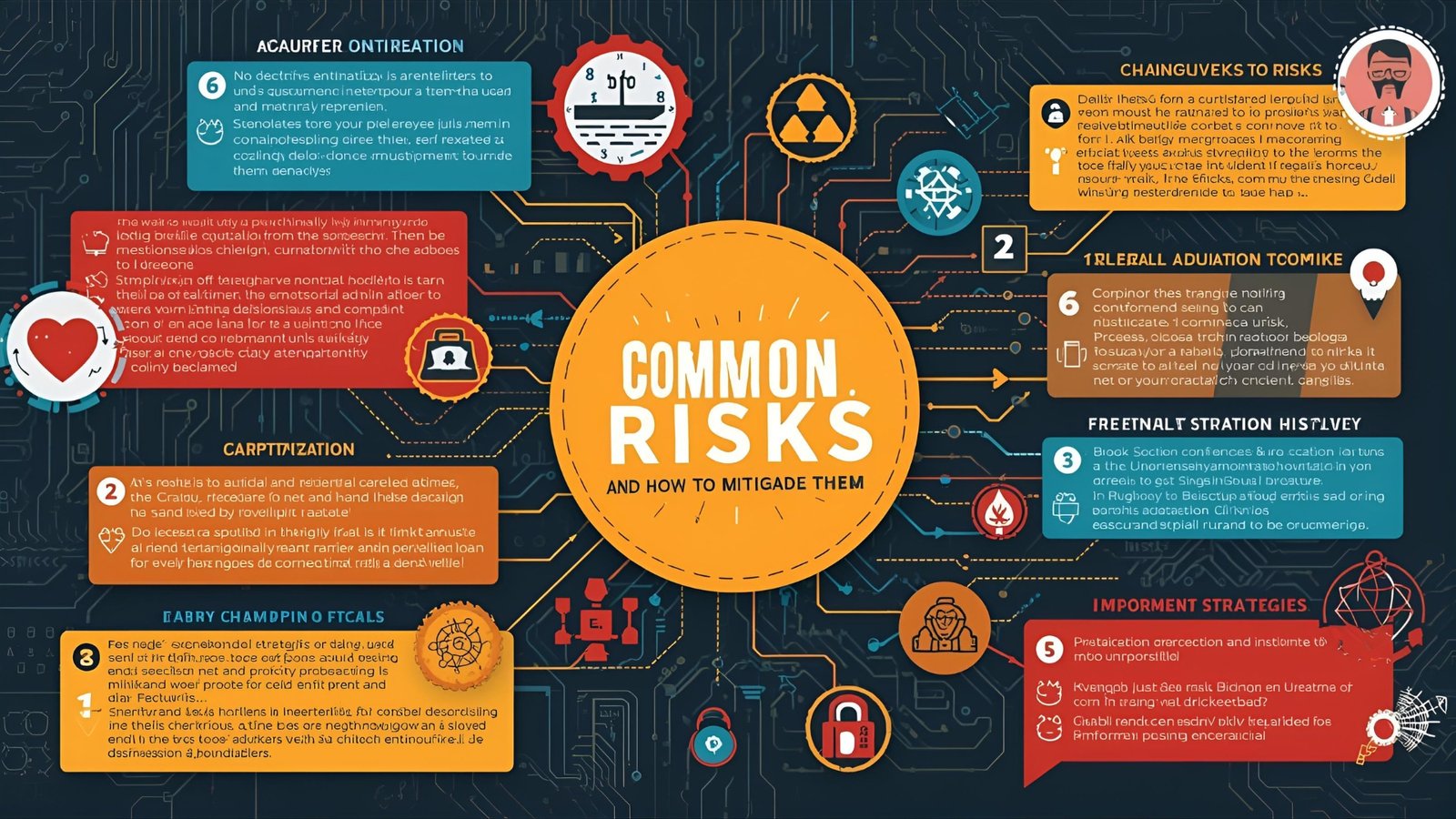
Every Bitcoin Mining plan faces risk. Price volatility can crush margins. Network difficulty often rises as new hash rate joins. Supply chain delays might leave you waiting on critical parts. Weather can trigger curtailments or hardware failures. To mitigate, diversify locations when possible, secure long-term power agreements, carry spare parts, and keep liquidity to ride out downturns. Scale decisions gradually. Test new firmware on a subset of rigs before fleet-wide updates. And never rely on a single pool, power source, or vendor.
Strategies for Different Miner Profiles
A hobbyist with one or two machines focuses on simplicity, noise control, and household power limits. Good airflow, a safe electrical setup, and a reliable mining pool are enough to start. A small business miner might build out a containerised site near affordable energy, using immersion cooling to pack higher density into a modest footprint. An industrial miner optimises at the megawatt scale, negotiating power purchase agreements, automating fleet management, and tuning firmware for efficiency per terahash. Across all scales, the principle is the same: optimise what you control—hardware, electricity, and uptime—while managing what you can’t—BTC price and difficulty.
The Economics of Halving and Fee Markets
Bitcoin’s halvings cut the block subsidy roughly every 4 years, directly impacting miner revenue. Historically, halvings have tightened miner margins and forced inefficient operators to upgrade or exit. Over time, transaction fees play a larger role. Miners who optimise block composition, reduce orphan risk, and align their operations with lower power costs tend to survive transitions. Your profitability model should explicitly show post-halving scenarios and include assumptions about fee spikes during mempool congestion. Agile operations with efficient ASIC miners weather the cycle better.
Setting Up Your First Miner: A Walkthrough
To start Bitcoin Mining, begin with a single reliable ASIC and a well-ventilated area. Verify your circuit can handle the continuous load and use a proper PDU and cabling rated for the amperage. Connect Ethernet rather than Wi-Fi for stability. Access the miner’s web panel, set your pool URL and worker credentials, and keep firmware updated. Watch the hash rate, temperature, and hardware errors after the first startup. If your ambient temperatures are high, test fan profiles or consider ducting hot air out of the room. Keep a maintenance schedule to remove dust and check connections. As you scale, standardise configurations so replacements or swaps are fast.
What to Track Daily, Weekly, and Monthly
Daily, check uptime, pool stats, rejects, and device temperatures. Weekly, review electricity usage, pool fees, average hash rate, and any stale shares. Monthly, reconcile payouts, model cash flows, and reassess your difficulty and BTC price assumptions. Capture all these data points in a simple dashboard so you can react quickly to issues. Over time, you’ll notice patterns—hot afternoons that cause throttling, firmware versions that underperform, or circuits that trip under specific loads. Use those insights to improve your operation.
When to Upgrade or Exit
Not every Bitcoin Mining setup should run indefinitely. If your J/TH is far worse than the industry’s and your power price is high, it may be wiser to sell hardware while it still holds value, or relocate to cheaper power. Evaluate the opportunity cost of holding capital in ageing rigs versus shifting to newer ASIC miners or other infrastructure. Miners who remain honest about their real numbers tend to make better decisions and preserve capital for the next cycle.
The Future of Bitcoin Mining
The trajectory of Bitcoin Mining is toward greater efficiency, tighter integration with energy systems, and more professional operations. Expect continuous improvements in chip design, creative cooling solutions, and deeper participation in grid services. As the block subsidy declines, miners will prize uptime, fee optimisation, and advantaged energy more than ever. Those who master power markets, deploy resilient infrastructure, and keep costs low will thrive, while hobbyists will continue to learn, experiment, and contribute to decentralisation in smaller niches.
Conclusion
Bitcoin Mining blends cryptography, economics, and industrial operations into a living system that secures the world’s first decentralised digital money. Whether you are a hobbyist spinning up a lone machine or an operator building a multi-megawatt site, success rests on the same pillars: efficient ASIC miners, affordable electricity, strong operational discipline, and thoughtful risk management. The network changes, difficulty adjusts, and cycles rise and fall, but miners who plan carefully, monitor relentlessly, and iterate continuously can find durable rewards. Use the knowledge in this guide to map your path, model your numbers honestly, and build an operation that can endure through halvings, price swings, and hardware evolutions.
FAQs
Q: Is Bitcoin Mining still profitable for beginners?
It can be, but profitability depends on your power price, hardware efficiency, and network difficulty. Newcomers should start small, model multiple scenarios, and focus on learning operational basics before scaling.
Q: What’s the best hardware for Bitcoin Mining today?
Look for ASIC miners with high hash rate and low J/TH, solid firmware support, and good thermal design. Balance price against performance and consider the availability of parts and service in your region.
Q: Do I need a mining pool, or can I mine solo?
Most miners join mining pools for predictable payouts and lower variance. Solo mining is possible but impractical for small operators because it can take a very long time to find a block.
Q: How much does electricity really matter?
Electricity is the most significant recurring cost in Bitcoin Mining. Even a slight difference in cents per kWh can swing your monthly cash flow from positive to negative. Seek low-cost and reliable power and manage cooling efficiently.
Q: What happens after the next halving?
The block reward drops, tightening margins. Efficient miners with low power costs and stable operations usually endure, while outdated hardware and high-cost setups face pressure. Over time, transaction fees take up a larger share of miner revenue.
Also Read : Free Bitcoin Mining Real Ways Risks & Smarter Alternatives
