

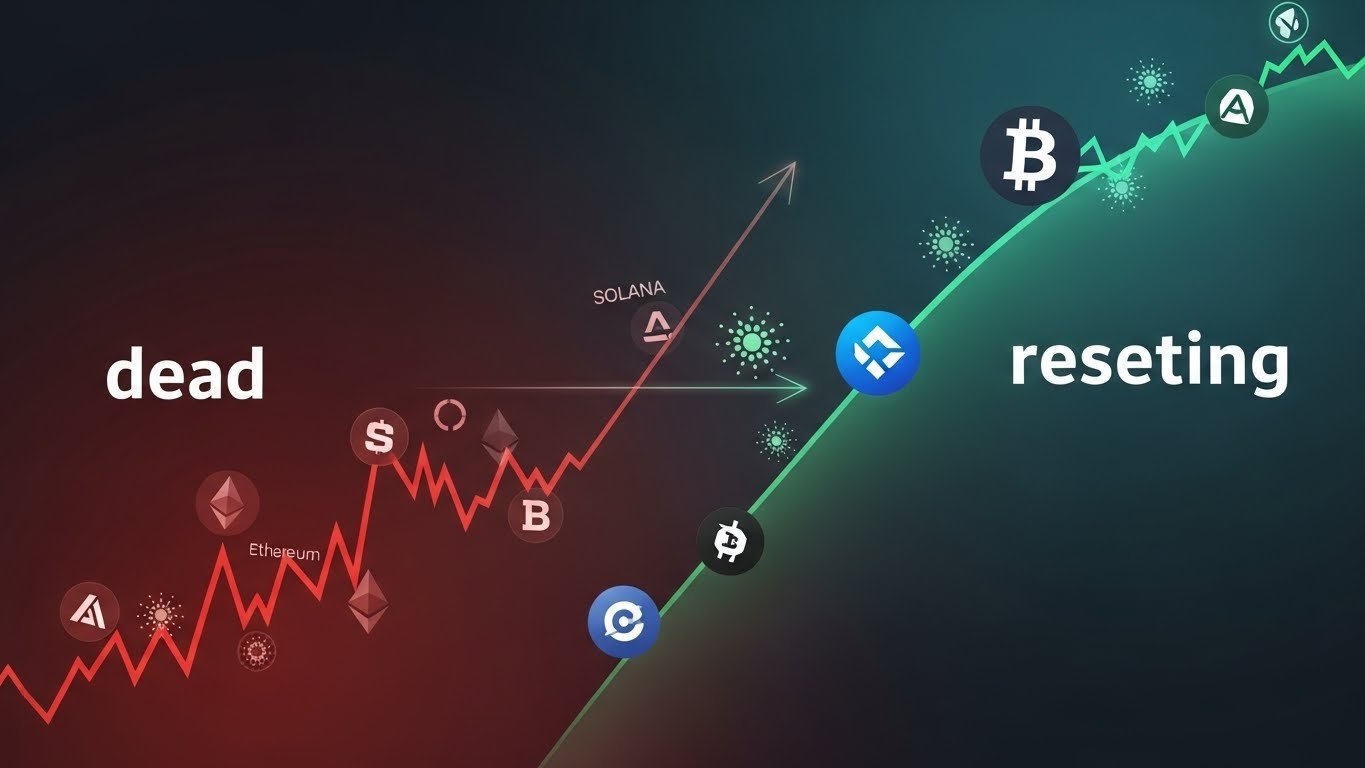
Is Altcoin Season 2026 finally here, or have altcoins lost their momentum forever? The silence from once-booming alternative cryptocurrencies has left many traders wondering whether this is the end of an era or simply a strategic market reset before the next explosive rally.
Understanding the current state of Altcoin Season 2026 requires looking beyond surface-level price movements and diving deep into market mechanics, institutional sentiment, regulatory developments, and technological innovations that are reshaping the entire cryptocurrency ecosystem. The distinction between a dying market and a resetting one could mean the difference between massive profits and devastating losses for investors who position themselves correctly during this critical period.
The cryptocurrency landscape has undergone tremendous transformation since the last major altcoin rally. Bitcoin dominance has fluctuated dramatically, decentralized finance protocols have matured, and new blockchain technologies have emerged that challenge the very definition of what makes an altcoin valuable. This comprehensive analysis will examine whether alternative cryptocurrencies are experiencing temporary consolidation or facing existential threats that could permanently alter their role in the digital asset ecosystem.
Understanding the Altcoin Season Phenomenon
The concept of altcoin season represents a specific market phase where alternative cryptocurrencies significantly outperform Bitcoin, creating wealth-generation opportunities that attract both retail and institutional investors. Historically, these periods have been characterized by explosive price movements, with some altcoins delivering returns of 500% to 1000% within weeks or months.
Cryptocurrency market cycles typically follow predictable patterns where Bitcoin leads initial rallies, establishing new price discovery levels before capital rotation begins flowing into alternative digital assets. During previous altcoin seasons, we witnessed this capital migration create cascading effects across the entire crypto ecosystem, with mid-cap and small-cap projects experiencing parabolic growth that dwarfed Bitcoin’s percentage gains.
The mechanics behind Altcoin Season 2026 differ substantially from previous cycles due to several evolutionary factors within the cryptocurrency space. The maturation of decentralized finance, the proliferation of layer-2 scaling solutions, and the increasing sophistication of blockchain technology have fundamentally changed how investors evaluate and allocate capital to alternative cryptocurrencies.
Market participants now employ complex metrics beyond simple price action to identify genuine value propositions. Total value locked, real yield generation, active developer communities, and tangible use cases have become essential criteria for distinguishing between projects with long-term viability and those destined for irrelevance. This analytical rigor represents a significant departure from the speculation-driven rallies that defined earlier crypto market trends.
The Current State of Cryptocurrency Markets in 2026
Analyzing the present condition of cryptocurrency investments reveals a landscape marked by consolidation rather than capitulation. Many altcoins have retraced significantly from their all-time highs, yet network activity, development progress, and institutional adoption metrics tell a more nuanced story than price charts alone suggest.
Bitcoin dominance has oscillated within a relatively tight range throughout early 2026, neither decisively breaking out to confirm a prolonged bear market nor collapsing to signal the beginning of widespread altcoin season characteristics. This equilibrium reflects market uncertainty as investors weigh macroeconomic factors against the fundamental improvements happening within individual blockchain projects.
The digital asset market has witnessed remarkable resilience despite facing headwinds from regulatory scrutiny, macroeconomic volatility, and lingering skepticism from traditional finance institutions. Projects with genuine utility have maintained steady development trajectories, accumulated users, and generated meaningful revenue through decentralized applications that solve real-world problems.
Institutional involvement in cryptocurrency trading has reached unprecedented levels, with major financial institutions launching dedicated digital asset divisions and investment products. However, this capital has flowed selectively into established projects with clear regulatory pathways rather than broadly into speculative altcoins, creating a bifurcated market where quality projects thrive while questionable ventures struggle for survival.
Key Indicators That Define Altcoin Season 2026
Several quantifiable metrics help investors determine whether Altcoin Season 2026 has genuinely commenced or remains on the horizon. The altcoin season index, which measures the performance of the top alternative cryptocurrencies against Bitcoin over specific timeframes, currently hovers in neutral territory, suggesting neither dominant trend has established clear supremacy.
Trading volume patterns across cryptocurrency exchanges provide crucial insights into market sentiment and capital allocation preferences. Recent months have shown sporadic spikes in altcoin trading activity, particularly surrounding major protocol upgrades or partnership announcements, yet sustained volume increases across broad market segments remain elusive, indicating cautious rather than euphoric investor positioning.
On-chain metrics for leading altcoins reveal interesting divergences between price action and fundamental growth. Many layer-1 blockchains have experienced consistent increases in daily active addresses, transaction counts, and smart contract deployments, suggesting organic ecosystem development continues despite stagnant or declining token prices—a classic characteristic of market resets rather than terminal decline.
Social sentiment analysis across crypto communities shows mixed signals, with experienced traders expressing calculated optimism while retail participants exhibit wariness born from previous market cycles. This psychological dynamic often precedes significant market transitions, as widespread skepticism creates conditions where unexpected rallies catch the majority off-guard, potentially triggering the momentum required to initiate authentic altcoin season conditions.
Why Some Believe Altcoins Are Dead
Skeptics arguing that altcoins have entered permanent decline point to several concerning trends that have emerged throughout 2025 and into early 2026. The proliferation of failed projects, abandoned development efforts, and outright fraudulent schemes has left countless investors nursing substantial losses, creating justifiable cynicism about the viability of alternative cryptocurrency investments beyond established blue-chip assets.
Regulatory pressure has intensified globally, with enforcement actions targeting projects deemed to be unregistered securities offerings. This regulatory clarity, while potentially beneficial long-term, has created immediate challenges for many altcoin projects that must now navigate complex compliance requirements or risk delisting from major cryptocurrency exchanges, effectively cutting off access to liquidity and new investors.
The technological advantage that once distinguished various blockchain platforms has narrowed considerably as cross-chain interoperability solutions mature and layer-2 scaling implementations make established networks more competitive. Projects that built their value propositions primarily on technical specifications now struggle to articulate unique selling points as technological parity becomes increasingly common across the digital asset landscape.
Market concentration has accelerated, with capital increasingly flowing toward a smaller number of proven projects while hundreds of mid-cap and small-cap altcoins languish in obscurity. This winner-take-most dynamic suggests that many alternative cryptocurrencies may never recover their previous valuations, as investors gravitate toward established ecosystems with network effects, developer mindshare, and institutional backing that smaller competitors cannot replicate.
The Case for Altcoin Market Reset Rather Than Death
Contrasting the pessimistic outlook, substantial evidence supports the thesis that Altcoin Season 2026 represents a healthy market reset rather than a terminal decline. Historical crypto market cycles demonstrate that consolidation periods following euphoric peaks serve essential functions, eliminating weak projects while allowing fundamentally sound ventures to refine their value propositions and strengthen their competitive positions.
The current market environment bears striking similarities to previous transitional phases that preceded explosive altcoin rallies. Extended periods of sideways price action, declining trading volumes, and widespread investor apathy have historically created the conditions necessary for sustained upward trends once catalysts emerge and early adopters begin accumulating positions before mainstream recognition develops.
Development activity across leading blockchain ecosystems has actually accelerated during this consolidation period, with major protocol upgrades, innovative applications, and technological breakthroughs happening at unprecedented rates. This disconnect between fundamental progress and price performance typically resolves through significant upward price adjustments as the market eventually recognizes and rewards genuine value creation.
The infrastructure supporting cryptocurrency trading and adoption has matured tremendously, with improved custody solutions, sophisticated trading platforms, regulatory frameworks in progressive jurisdictions, and mainstream payment integrations creating pathways for capital inflows that were previously impossible. These structural improvements position quality altcoins to capture value during the next growth phase in ways that earlier market cycles could not support.
Factors That Could Trigger Altcoin Season 2026
Multiple potential catalysts exist that could ignite widespread altcoin season conditions throughout 2026 and beyond. Macroeconomic shifts, particularly changes in monetary policy that increase risk appetite among investors, historically correlate with capital rotation from Bitcoin into higher-beta alternative cryptocurrencies as traders seek amplified returns during favorable market environments.
Technological breakthroughs in scaling, privacy, or interoperability could suddenly shift competitive dynamics within the blockchain industry, creating explosive growth opportunities for projects that successfully implement innovations addressing current limitations. The successful launch of anticipated protocol upgrades for major altcoin networks could serve as watershed moments that attract significant capital inflows and renewed investor enthusiasm.
Regulatory clarity in major markets, particularly if frameworks emerge that provide clear operating guidelines without stifling innovation, could unlock institutional capital currently sitting on the sidelines. Major financial institutions have expressed interest in digital asset exposure but require regulatory certainty before committing substantial resources, making positive regulatory developments potentially transformative catalysts for Altcoin Season 2026.
Real-world adoption milestones, such as major corporations integrating blockchain technology for supply chain management, decentralized identity solutions, or tokenized asset trading, could demonstrate tangible value propositions that justify higher valuations for cryptocurrency projects facilitating these use cases. As practical applications prove their worth beyond speculative trading, fundamental valuation methods could support sustained price appreciation.
Investment Strategies for Navigating Altcoin Season 2026
Successful navigation of Altcoin Season 2026 requires disciplined approaches that balance opportunity recognition with rigorous risk management. Portfolio construction should emphasize quality over quantity, focusing on altcoins with demonstrable utility, sustainable tokenomics, active development communities, and clear competitive advantages within their respective niches rather than chasing speculative momentum plays.
Dollar-cost averaging into conviction positions during periods of maximum pessimism allows investors to accumulate cryptocurrency holdings at favorable valuations while mitigating timing risk. This systematic approach proves particularly effective during consolidation phases when prices remain range-bound, enabling strategic accumulation before potential breakouts that characterize the beginning of authentic altcoin season conditions.
Diversification across different blockchain ecosystems and use cases provides protection against concentrated risk while ensuring exposure to whichever sectors lead the next market expansion. Balancing holdings between established layer-1 platforms, promising layer-2 solutions, decentralized finance protocols, and emerging application categories creates portfolio resilience regardless of which narratives capture investor imagination during Altcoin Season 2026.
Implementing exit strategies before entering positions helps investors avoid the emotional decision-making that destroys returns during volatile markets. Defining specific price targets or fundamental developments that would trigger profit-taking ensures disciplined capital preservation, allowing investors to capture gains during altcoin rallies while protecting against the inevitable corrections that follow unsustainable parabolic moves.
Technical Analysis and Market Trends for 2026
Cryptocurrency chart patterns across major altcoins currently display consolidation formations that often precede significant directional moves. Many alternative cryptocurrencies have established strong support levels during the recent correction phase, creating technical foundations that could support substantial rallies if these levels hold and buying pressure materializes throughout Altcoin Season 2026.
Moving average convergences on longer timeframes suggest that several leading altcoins are approaching potential inflection points where technical momentum could shift decisively. These technical setups, combined with improving fundamental metrics, create conditions where patient investors positioned ahead of trend reversals could capture substantial returns as crypto market trends evolve from consolidation to expansion phases.
Volume analysis reveals interesting patterns where declining selling pressure meets occasional strong buying interest, suggesting that holders have become increasingly reluctant to sell at current prices while strategic accumulation occurs during moments of temporary weakness. This dynamic often characterizes market bottoms and reset phases that precede sustained uptrends in cryptocurrency investments.
Correlation analysis between Bitcoin and major altcoins shows periodic decoupling where alternative cryptocurrencies demonstrate independent price action based on project-specific developments. This selective strength among quality projects supports the reset thesis rather than death scenario, as genuine value propositions attract capital regardless of broader market conditions, potentially foreshadowing broader altcoin season characteristics emerging.
The Role of Bitcoin Dominance in Altcoin Performance
Bitcoin dominance metrics provide essential context for understanding altcoin season dynamics and predicting potential shifts in capital allocation patterns. Historically, declining Bitcoin dominance correlates strongly with altcoin outperformance, as investors rotate profits from Bitcoin into higher-risk, higher-reward alternative cryptocurrencies seeking amplified returns during risk-on market environments.
The current Bitcoin dominance level sits within a historically neutral range, neither confirming continued flight to safety nor signaling imminent capital rotation into altcoins. This equilibrium reflects market uncertainty as investors weigh Bitcoin’s established store-of-value narrative against the potential upside offered by fundamentally improved alternative blockchain projects that have matured significantly since previous market cycles.
Breaking this equilibrium in either direction would provide clear signals about near-term crypto market trends. A decisive breakdown in Bitcoin dominance below key technical levels would strongly suggest Altcoin Season 2026 has commenced, while breakouts to new highs would indicate continued risk aversion and capital consolidation into the most established digital asset, potentially delaying widespread altcoin outperformance.
Understanding that Bitcoin dominance operates cyclically rather than linearly helps investors maintain appropriate expectations and positioning. Even during prolonged periods of Bitcoin outperformance, patient capital allocated to quality altcoins benefits from accumulation at favorable valuations, positioning portfolios to capture substantial gains when inevitable mean reversion eventually occurs and altcoin season characteristics return.
Regulatory Developments Impacting Altcoin Markets
The regulatory landscape for cryptocurrency investments has evolved dramatically, with governments worldwide implementing frameworks that profoundly impact altcoin viability and accessibility. Recent enforcement actions have created clarity around which project structures and token distributions trigger securities regulations, forcing many blockchain projects to adapt business models or face potential legal consequences that threaten their continued operations.
Progressive jurisdictions have introduced balanced regulatory approaches that protect consumers while fostering innovation, creating competitive advantages for altcoins domiciled in these favorable environments. Projects that proactively embrace regulatory compliance position themselves to capture institutional capital and mainstream adoption opportunities unavailable to competitors operating in legal gray areas, potentially driving significant performance differentiation during Altcoin Season 2026.
The introduction of regulatory frameworks for stablecoins, decentralized finance protocols, and tokenized securities has created both challenges and opportunities for alternative cryptocurrencies. While compliance requirements increase operational complexity and costs, clear rules provide certainty that enables larger players to enter markets previously considered too risky, potentially catalyzing substantial capital inflows into compliant crypto projects.
Global coordination on cryptocurrency regulation remains imperfect, creating arbitrage opportunities and competitive dynamics as projects migrate to favorable jurisdictions or structure operations to navigate complex multi-jurisdictional requirements. This regulatory fragmentation influences which altcoins are positioned to thrive, with winners likely emerging from those that successfully balance innovation with compliance across major markets.
Top Altcoin Sectors to Watch in 2026
Decentralized finance continues evolving beyond initial lending and trading protocols toward sophisticated financial infrastructure that challenges traditional banking systems. DeFi altcoins offering real yield generation, sustainable economic models, and institutional-grade security could lead Altcoin Season 2026 as these protocols demonstrate their ability to capture meaningful market share from centralized finance incumbents.
Layer-2 scaling solutions have matured significantly, offering user experiences approaching centralized alternatives while maintaining blockchain security guarantees. Altcoins powering these scaling solutions benefit from increasing transaction volumes as developers build applications requiring throughput impossible on base layer networks, creating sustained demand drivers that could fuel substantial price appreciation during market expansion phases.
Artificial intelligence and machine learning integration with blockchain technology represents an emerging sector where crypto projects are developing novel approaches to distributed computation, data marketplaces, and automated smart contract optimization. These AI-crypto convergence plays attract significant interest from both traditional tech investors and crypto natives, potentially creating crossover appeal that drives capital inflows during Altcoin Season 2026.
Real-world asset tokenization has progressed from theoretical concept to practical implementation, with projects facilitating tokenized real estate, commodities, and traditional securities gaining traction. Altcoins enabling these use cases address trillion-dollar markets, offering value propositions that resonate with institutional investors seeking blockchain efficiency benefits for traditional asset classes, potentially driving sustained growth independent of speculative crypto market cycles.
Common Mistakes to Avoid During Altcoin Season
Chasing momentum without fundamental analysis represents one of the most destructive behaviors during altcoin rallies, as late entrants frequently buy near local tops after substantial price appreciation has already occurred. Disciplined investors resist FOMO-driven decisions, instead focusing on projects with strong fundamentals trading at reasonable valuations rather than whatever cryptocurrency is generating the most social media hype.
Overleveraging positions through margin trading or futures contracts amplifies both gains and losses, but asymmetric risk profiles make these strategies particularly dangerous during volatile altcoin season conditions. Conservative position sizing that allows investors to withstand substantial drawdowns without forced liquidations proves essential for long-term capital preservation and compounding returns across multiple crypto market cycles.
Neglecting to take profits during euphoric market phases leaves investors vulnerable to inevitable corrections that follow unsustainable parabolic moves. Implementing systematic profit-taking strategies, whether through predetermined price targets or portfolio rebalancing triggers, ensures that Altcoin Season 2026 gains translate into realized returns rather than paper profits that evaporate during subsequent consolidation phases.
Ignoring project fundamentals in favor of technical analysis alone creates blind spots where investors remain unaware of developments that could dramatically impact altcoin valuations. Balanced approaches incorporating both technical and fundamental analysis provide more complete pictures of risk-reward profiles, helping investors distinguish between genuine accumulation opportunities and value traps that will never recover previous highs.
The Psychology of Altcoin Investing
Understanding investor psychology proves crucial for successfully navigating Altcoin Season 2026, as emotional decision-making consistently destroys returns across all markets but particularly within volatile cryptocurrency trading environments. Recognizing common psychological pitfalls like confirmation bias, anchoring to previous price levels, and herd mentality enables more objective evaluation of market conditions and investment opportunities.
Fear and greed cycles drive crypto market trends to irrational extremes in both directions, creating substantial opportunities for contrarian investors willing to act against prevailing sentiment. Accumulating quality altcoins during periods of maximum pessimism when most investors have capitulated requires psychological fortitude but historically generates superior returns compared to following momentum during euphoric phases.
Patience emerges as perhaps the most valuable psychological trait for cryptocurrency investments, as meaningful price movements often require extended timeframes to develop despite the 24/7 nature of crypto markets creating illusions of constant action. Resisting urges to constantly trade or chase every market movement preserves capital and positioning for when genuine opportunities emerge during Altcoin Season 2026.
Developing emotional resilience to withstand portfolio volatility without panic selling during temporary drawdowns separates successful long-term crypto investors from those who consistently buy high and sell low. Establishing investment theses before entering positions and maintaining conviction through volatility enables investors to benefit from the asymmetric return profiles that make altcoins compelling despite their inherent risks.
Conclusion
The evidence comprehensively suggests that Altcoin Season 2026 represents a market reset rather than the death of alternative cryptocurrencies. Fundamental developments across blockchain ecosystems, improving regulatory clarity, maturing infrastructure, and historical market cycle patterns all support the thesis that quality altcoins are consolidating before their next major expansion phase rather than entering terminal decline.
Successful navigation of Altcoin Season 2026 requires balanced perspectives that acknowledge both risks and opportunities within cryptocurrency markets. Patient investors who conduct thorough research, maintain disciplined risk management, and position in quality projects trading at reasonable valuations relative to their fundamental progress will likely capture substantial returns as the next growth phase unfolds.
The transformation from speculation-driven crypto market trends toward fundamentals-based valuation methodologies creates environments where genuine innovation and utility receive appropriate recognition and capital allocation. This evolution benefits long-term cryptocurrency investors while creating more sustainable market dynamics compared to previous cycles dominated by pure speculation.
Now is the time to develop your Altcoin Season 2026 strategy, conducting research on promising blockchain projects, assessing your risk tolerance, and positioning your portfolio to capture opportunities as they emerge. Whether altcoins are resetting or entering new paradigms, prepared investors who understand market dynamics and maintain disciplined approaches will navigate coming developments successfully.
See more;Crypto Market News Analysis Today Bitcoin Above $116K, ETH Targets $5K
