


The cryptocurrency mining landscape has evolved dramatically, and finding the best bitcoin mining machines 2025 has to offer requires careful analysis of performance, efficiency, and profitability. As Bitcoin’s network difficulty continues to increase and energy costs remain a critical factor, selecting the right mining hardware can make or break your mining operation.
In today’s competitive mining environment, miners need equipment that delivers exceptional hash rates while maintaining energy efficiency. The best bitcoin mining machines 2025 market features cutting-edge ASIC miners that outperform previous generations by significant margins. Whether you’re a small-scale home miner or planning an industrial mining operation, understanding which machines offer the highest return on investment is crucial for success.
This comprehensive guide examines the top-performing Bitcoin mining machines currently dominating the market, analyzing their specifications, profitability potential, and real-world performance data to help you make informed investment decisions.
What Makes the Best Bitcoin Mining Machines in 2025?
The cryptocurrency mining industry has witnessed unprecedented technological advancement, with manufacturers pushing the boundaries of chip efficiency and cooling solutions. Modern ASIC miners incorporate advanced semiconductor technology, typically built on 3nm to 5nm process nodes, delivering substantially higher hash rates per watt consumed.
Key factors that define superior mining hardware include hash rate performance, energy efficiency measured in joules per terahash (J/TH), thermal management capabilities, and overall build quality. The most successful miners also consider factors like noise levels, maintenance requirements, and manufacturer support when evaluating potential investments.
Energy efficiency has become the primary differentiator between profitable and unprofitable mining operations. With electricity costs representing 60-70% of operational expenses, miners prioritize equipment that maximizes computational power while minimizing energy consumption.
Top Bitcoin Mining Machines for Maximum ROI
Bitmain Antminer S21 Pro
The Bitmain Antminer S21 Pro stands as one of the most impressive additions to the ASIC mining market. This powerhouse delivers an exceptional 234 TH/s hash rate while consuming 3,510W of power, resulting in an efficiency rating of 15 J/TH.
Built with advanced cooling systems and robust construction, the S21 Pro demonstrates Bitmain’s commitment to producing reliable, high-performance mining equipment. The machine’s enhanced chip architecture enables sustained operation under demanding conditions while maintaining optimal temperatures.
Price considerations for the S21 Pro typically range from $3,500 to $4,200 depending on market conditions and supplier availability. The initial investment requires careful calculation against expected earnings, particularly considering Bitcoin’s price volatility and network difficulty adjustments.
MicroBT Whatsminer M60S
MicroBT’s Whatsminer M60S represents another excellent option for serious miners seeking high-performance equipment. This machine produces an impressive 172 TH/s hash rate with power consumption of 3,344W, achieving an efficiency of 19.4 J/TH.
The M60S features MicroBT’s proprietary cooling technology and optimized power management systems. These design improvements contribute to extended operational lifespan and reduced maintenance requirements compared to earlier models.
Market pricing for the M60S generally falls between $2,800 and $3,400, making it an attractive option for miners balancing performance with initial investment costs. The machine’s reliability record and manufacturer support network add significant value for long-term operations.
Canaan AvalonMiner 1466
Canaan’s AvalonMiner 1466 offers compelling performance specifications with its 150 TH/s hash rate and 3,400W power consumption, resulting in 22.7 J/TH efficiency. While not the most efficient option available, the 1466 provides excellent value for cost-conscious miners.
The AvalonMiner series has built a reputation for durability and consistent performance across various operating conditions. Canaan’s focus on thermal management ensures stable operation even in challenging environments.
Pricing for the AvalonMiner 1466 typically ranges from $2,200 to $2,800, positioning it as an accessible entry point for miners with limited budgets who still want competitive performance.
Best Bitcoin Mining Machines 2025: Performance Analysis
Hash Rate Performance Comparison
When evaluating mining hardware, hash rate serves as the primary performance indicator. Higher hash rates directly correlate with increased earning potential, assuming electricity costs remain constant. The top-tier machines in 2025 deliver hash rates exceeding 200 TH/s, representing significant improvements over previous generations.
Modern ASIC miners achieve these impressive hash rates through advanced chip designs utilizing smaller process nodes. The transition from 7nm to 3nm manufacturing processes has enabled dramatic improvements in both performance and energy efficiency.
Miners should consider hash rate stability under various operating conditions, as sustained performance matters more than peak theoretical numbers. Real-world testing often reveals differences between manufacturer specifications and actual operational performance.
Energy Efficiency Standards
Energy efficiency has become the most critical factor in mining profitability calculations. The best performing machines achieve efficiency ratings below 20 J/TH, with premium models reaching as low as 13-15 J/TH.
Improved efficiency directly impacts operational costs, particularly in regions with higher electricity rates. Miners operating in areas with expensive power must prioritize efficiency over raw hash rate to maintain profitability.
Advanced power management systems in modern ASIC miners include features like dynamic frequency scaling and intelligent power distribution, further optimizing energy consumption based on operating conditions.
Cooling and Thermal Management
Effective thermal management directly impacts mining machine longevity and performance stability. The best mining machines incorporate sophisticated cooling solutions, including enhanced heat sinks, optimized airflow design, and intelligent fan control systems.
Proper cooling prevents thermal throttling, ensuring machines maintain peak performance during extended operations. Inadequate cooling can lead to reduced hash rates, increased error rates, and premature hardware failure.
Environmental considerations also play a crucial role, as ambient temperature significantly affects cooling efficiency and overall power consumption. Miners in warmer climates must factor additional cooling costs into their profitability calculations.
Profitability Calculator for Top Mining Machines
Revenue Calculation Methodology
Calculating mining profitability requires considering multiple variables including hash rate, power consumption, electricity costs, Bitcoin price, and network difficulty. These factors constantly fluctuate, making accurate long-term projections challenging.
Basic profitability calculations start with daily Bitcoin earnings based on hash rate and current network difficulty, then subtract electricity costs to determine net profit. However, successful miners must also account for equipment depreciation, maintenance costs, and operational overhead.
Advanced calculations should include scenarios for different Bitcoin price levels and network difficulty changes. Historical data suggests network difficulty increases approximately 2-5% per adjustment period, gradually reducing mining rewards over time.
Break-Even Analysis
Break-even calculations determine the timeframe required to recover initial hardware investments through mining profits. Current market conditions suggest break-even periods ranging from 12 to 24 months for efficient mining equipment, depending on electricity costs and Bitcoin prices.
Miners should perform sensitivity analysis to understand how changes in key variables affect break-even timelines. Conservative projections often assume modest Bitcoin price appreciation and steady difficulty increases.
Risk assessment should also consider potential obsolescence, as newer, more efficient mining hardware regularly enters the market, potentially reducing the competitiveness of current-generation equipment.
Long-Term ROI Projections
Long-term return on investment calculations must account for Bitcoin’s halving events, which occur approximately every four years and reduce mining rewards by 50%. The next halving is expected in 2028, significantly impacting mining economics.
Historical analysis shows that efficient mining operations can achieve positive ROI over 3-5 year timeframes, even accounting for halvings and increasing network difficulty. However, these projections depend heavily on Bitcoin’s long-term price appreciation.
Successful miners often reinvest profits into newer, more efficient equipment to maintain competitive advantages and extend profitable operations beyond initial equipment lifecycles.
Industrial vs Home Bitcoin Mining Solutions
Industrial Mining Considerations
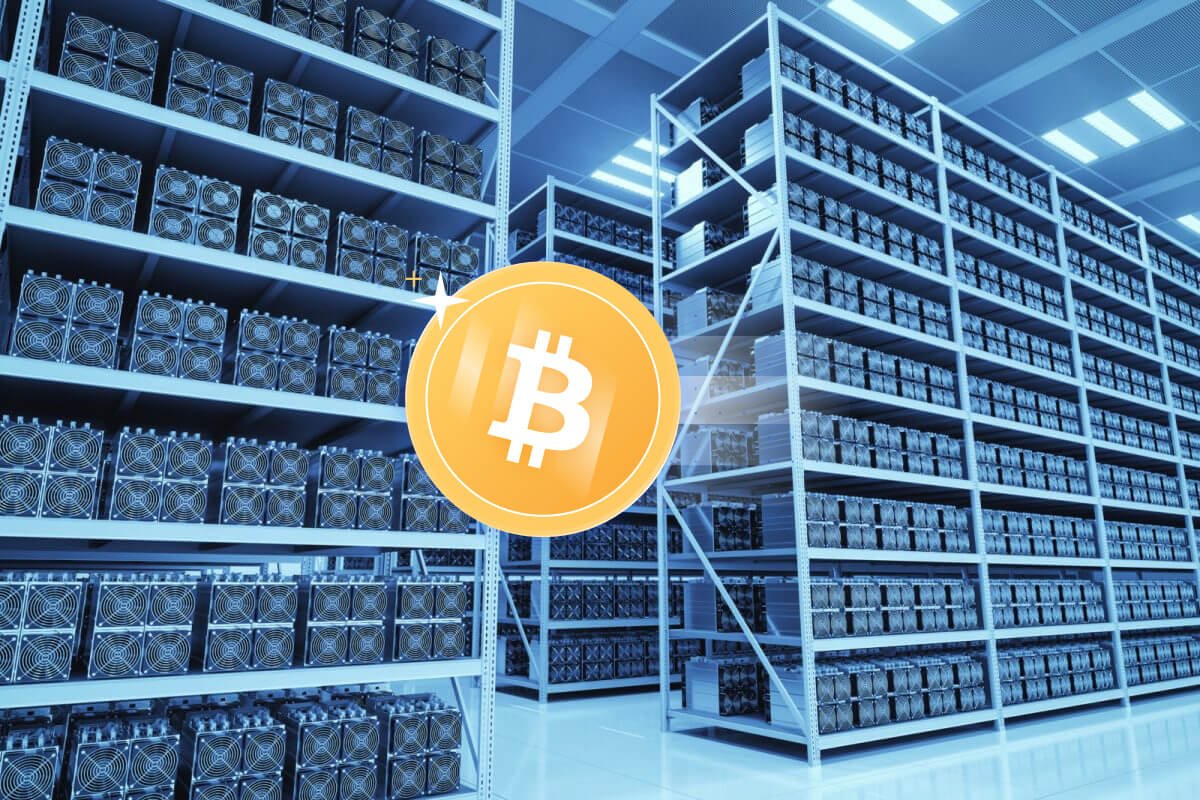
Industrial mining operations require different equipment selection criteria compared to home mining setups. Large-scale facilities prioritize maximum hash rate density, centralized management capabilities, and robust cooling infrastructure.
Industrial miners often negotiate bulk purchasing agreements with manufacturers, securing better pricing and priority delivery schedules. These advantages can significantly impact overall profitability and operational efficiency.
Power infrastructure becomes critical for industrial operations, requiring three-phase power distribution, backup generators, and sophisticated electrical monitoring systems. These requirements add substantial upfront costs but enable more efficient large-scale operations.
Home Mining Setup Requirements
Home miners face unique constraints including noise limitations, power capacity restrictions, and cooling challenges. Residential mining setups typically support 1-5 mining machines, depending on available electrical capacity and local regulations.
Noise considerations often limit home miners to newer, quieter mining machines or require soundproofing solutions. Many residential areas have noise ordinances that restrict 24/7 operation of loud mining equipment.
Power infrastructure in residential settings usually limits miners to standard 120V or 240V circuits, constraining the number of high-power mining machines that can operate simultaneously. Electrical upgrades may be necessary for serious home mining operations.
Hybrid Mining Strategies
Some miners adopt hybrid approaches, combining home mining with hosted mining solutions or mining pool participation. These strategies can optimize profitability while managing operational complexity and risk.
Hosted mining services allow miners to purchase equipment deployed in professional facilities, benefiting from industrial electricity rates and optimal cooling without managing day-to-day operations.
Mining pool participation distributes risks and provides more predictable earnings compared to solo mining, making it particularly attractive for smaller-scale operations with limited hash rate.
Maintenance and Operational Costs
Preventive Maintenance Requirements
Modern ASIC miners require regular maintenance to sustain optimal performance and extend operational lifespan. Preventive maintenance typically includes fan replacement, thermal paste renewal, and dust removal from heat sinks and circuit boards.
Maintenance schedules vary by manufacturer and operating environment, but most experts recommend quarterly deep cleaning and annual component inspections. Harsh environments may require more frequent maintenance cycles.
Proper maintenance can extend mining machine lifespan from 2-3 years to 4-5 years or more, significantly improving overall return on investment. Neglected maintenance often results in premature failures and reduced hash rate performance.
Replacement Parts and Support
Access to replacement parts and manufacturer support significantly impacts long-term operational costs. Established manufacturers typically provide better parts availability and technical support compared to smaller companies.
Common replacement components include cooling fans, power supplies, and hash boards. Miners should factor replacement part costs into long-term profitability calculations, as these expenses can accumulate significantly over equipment lifecycles.
Warranty coverage varies among manufacturers, with some offering comprehensive protection while others provide limited coverage. Extended warranty options may be available for additional cost, providing peace of mind for expensive mining investments.
Operational Monitoring
Effective monitoring systems enable early detection of performance issues and equipment failures. Modern mining operations utilize specialized software to track hash rates, temperatures, power consumption, and error rates across multiple machines.
Remote monitoring capabilities allow operators to manage mining farms from anywhere, reducing operational overhead and enabling quick response to issues. Mobile alerts can notify operators of critical problems requiring immediate attention.
Data analysis from monitoring systems helps optimize performance settings, identify maintenance needs, and plan equipment upgrades. This information proves invaluable for maximizing mining profitability and operational efficiency.
Future-Proofing Your Mining Investment

Technology Roadmap Considerations
The ASIC mining industry continues advancing rapidly, with manufacturers developing increasingly efficient chips and improved cooling solutions. Understanding technology roadmaps helps miners make informed decisions about when to upgrade equipment.
Process node improvements from 5nm to 3nm and eventually 2nm will likely deliver substantial efficiency gains over the next 2-3 years. However, these improvements may come with significantly higher equipment costs.
Miners should balance cutting-edge technology with proven reliability, as newer equipment may have unknown issues that only surface after extended operation. Conservative approaches often prove more profitable than early adoption of unproven technology.
Scalability Planning
Successful mining operations plan for scalability from the beginning, considering factors like power infrastructure, cooling capacity, and space requirements for expansion. Modular designs enable organic growth as profits accumulate.
Power planning should include capacity for future expansion, as upgrading electrical infrastructure after initial installation often proves expensive and disruptive. Over-provisioning power capacity during initial setup usually proves cost-effective long-term.
Cooling infrastructure should also accommodate expansion plans, as adding machines without adequate cooling capacity can compromise performance across the entire operation. Proper planning prevents costly retrofits and performance degradation.
Market Adaptation Strategies
The cryptocurrency market’s volatility requires flexible strategies that can adapt to changing conditions. Successful miners develop contingency plans for different market scenarios, including bear markets and regulatory changes.
Diversification strategies might include mining alternative cryptocurrencies during periods when Bitcoin mining becomes unprofitable. Multi-algorithm mining machines provide flexibility to switch between different cryptocurrencies based on market conditions.
Risk management should include regular profitability assessments and predetermined exit strategies if mining becomes unprofitable. Having clear decision criteria prevents emotional attachment from leading to poor financial decisions.
Conclusion
Selecting the best bitcoin mining machines 2025 offers requires careful analysis of performance, efficiency, and long-term profitability potential. The machines highlighted in this guide represent the current pinnacle of ASIC mining technology, delivering exceptional hash rates with improved energy efficiency.
Success in Bitcoin mining depends not only on choosing high-quality equipment but also on understanding operational costs, maintenance requirements, and market dynamics. The most profitable operations combine efficient hardware with optimized facility management and strategic planning.
As the mining landscape continues evolving, staying informed about technological developments and market conditions remains crucial for maintaining competitive advantages. The best bitcoin mining machines 2025 market provides excellent opportunities for both newcomers and experienced miners willing to invest in quality equipment and proper operational planning.
Read more: Best Bitcoin Mining Hardware Comparison & Reviews 2025
