


If you’re asking can you mine Ethereum, you’re not alone. For years, the Ethereum network rewarded GPU mining and helped spark a global boom in consumer graphics cards and home mining rigs. That era ended with The Merge, when Ethereum transitioned from proof of work to proof of stake. The result was a complete shift in how the network secures itself and issues rewards. Yet the search query persists because newcomers still see old tutorials, marketplace listings for mining hardware, and social posts claiming that mining ETH is still possible.
This guide delivers a definitive, up-to-date answer, then goes far beyond it. You will learn why you cannot mine Ethereum anymore, what replaced mining, how staking works and what yields to expect, and which GPU-minable alternatives might still make sense if you already own hardware. We will also cover common misconceptions, security pitfalls, and a practical roadmap for anyone who wants to earn yield denominated in ETH without falling for outdated advice. By the end, you will understand the architecture behind the decision, the economics of validators, and the safest ways to participate today.
The Short Answer to “Can You Mine Ethereum?”
No. You cannot mine Ethereum on the main network anymore. Since The Merge, Ethereum uses proof of stake and issues rewards to validators who lock up ETH, propose blocks, and attest to other validators’ work. There is no mining difficulty, no block subsidy for miners, and no profit for pointing GPUs at Ethereum. Any claim that suggests otherwise is either referring to a different network, a fork, or is simply incorrect.
From Mining to Staking: Why Ethereum Changed
What The Merge Achieved
The Merge, completed in 2022, replaced energy-intensive proof of work with proof of stake, aligning Ethereum with a future that prizes scalability, sustainability, and security with dramatically lower energy usage. Under proof of work, miners competed to solve cryptographic puzzles using GPUs and ASICs. Under proof of stake, the network selects validators to propose blocks based on the amount of ETH they stake and their ongoing performance. The shift slashed energy consumption, simplified economic design, and prepared the network for a rollup-centric roadmap that emphasizes layer-2 scaling.
How Mining Used to Work—and Why It Stopped
Before the transition, GPU mining on Ethereum followed the Ethash algorithm. Miners invested in hardware, electricity, and cooling, then hoped that the value of ETH would exceed operating costs. It worked for a time because fees and block rewards justified the expense. However, the community long signaled that Ethereum would move to proof of stake. Once the switch flipped, the mining algorithm no longer governed block production and all of that GPU power had nowhere to point on Ethereum itself. The economic rationale vanished overnight.
Staking as the New Security Model
In the staking era, validators lock up ETH, run clients, and earn staking rewards for honest participation. Misbehavior or prolonged downtime can cause slashing or missed rewards. The design encourages security through capital at risk and operational diligence rather than raw electricity expenditure. This is why any plan premised on “mining ETH” is outdated. The correct question is how to participate in the staking economy or how to redirect GPUs to other proof-of-work chains that still pay miners.
If You Can’t Mine Ethereum, How Do You Earn ETH?

Solo Staking with 32 ETH
The most decentralized option is solo staking as a validator. You deposit 32 ETH into the validator contract, run a consensus client and an execution client, maintain uptime, and perform duties like attesting to blocks. Rewards accrue for proper performance and scale with network conditions and total ETH staked. Solo staking requires technical competence, secure infrastructure, regular updates, and protection against key compromise. It is the gold standard for those who want to maximize protocol alignment and decentralization.
Pooled Staking Without Custody of Keys
For those without 32 ETH or the desire to manage infrastructure, pooled staking enables participation with smaller amounts. Non-custodial pools let you keep ownership over deposit keys while delegating validator operations to specialized operators. This approach reduces operational load and minimum capital while preserving good security practices. You still earn staking yield, and you help secure the network, but you avoid the complexity of running a validator yourself.
Liquid Staking and LST/LRT Strategies
An increasingly popular path is liquid staking, where you deposit ETH and receive a liquid staking token—often called an LST—that represents your staked position. You earn staking rewards while the LST remains usable across DeFi for lending, trading, or providing liquidity. There are also restaking mechanisms and LRTs (liquid restaking tokens) that build additional yield strategies by committing staked capital to extra security services. These systems can amplify returns but add smart-contract and market risks that you must understand carefully.
Centralized Exchange Staking
Some centralized platforms offer “ETH staking” as a simple toggle. While this is convenient, it introduces custodial risk, potential withdrawal delays, and reliance on a single counterparty. If you go this route, conduct due diligence on the exchange’s solvency, compliance, and historical performance. Convenience is valuable, but understand the trade-offs versus self-custody or non-custodial pools.
What About Ethereum Mining Alternatives?
Ethereum Classic and Ethash-Compatible Coins
When people ask can you mine Ethereum, what they often mean is whether they can still profitably use their GPUs in a similar ecosystem. You cannot mine ETH, but you may mine Ethereum Classic (ETC), which still uses proof of work. Many former ETH miners migrated to ETC after The Merge because it retained the Ethash lineage (specifically Etchash). Profitability depends on coin price, block rewards, network difficulty, and your electricity costs. If you already own GPUs, testing ETC mining can make sense, but you must run the numbers honestly.
Other GPU-Friendly Networks
Beyond ETC, miners explore networks like Ravencoin, Ergo, and Kaspa—each with different algorithms, communities, and market dynamics. The economics of these alternatives are sensitive to price cycles and hash rate migrations. It’s crucial to measure hashrate, difficulty, expected block rewards, and hardware efficiency before committing. A rig that once printed ETH profits might be marginal or unprofitable on a smaller chain, so treat GPU mining as a business with thin margins rather than a guaranteed money maker.
Converting Mined Coins into ETH
If your goal is to accumulate ETH rather than dollars, one strategy is to mine an alternative proof-of-work coin and periodically swap it for ETH. This approach hinges on liquidity and fees. You will incur exchange spreads, network fees, and potential tax events. If the target chain lacks deep liquidity, slippage can erode returns. For some operators, simply purchasing ETH with cash flow or dollar-cost averaging is less complex and often more efficient.
Economics 101: Mining vs. Staking in 2025
Capital Expenditure and Operating Costs
Mining used to require heavy capex in GPUs, frames, power supplies, and cooling, plus opex for electricity and maintenance. Staking replaces hardware investment with capital at risk in the form of ETH itself. Your “hardware” is now a modest server or cloud instance, and your primary cost is opportunity cost on locked capital and operational diligence to avoid downtime or slashing. For many, staking’s economics are simpler, more predictable, and more environmentally friendly.
Yield, Volatility, and Real Returns
Mining returns were volatile because they depended on network difficulty, equipment efficiency, and token price. Staking returns also vary, but they are more stable, derived from block rewards, priority fees, and MEV redistribution mechanisms, all net of participation rates. Calculating real return requires factoring in ETH price volatility and compounding. Over long horizons, reliable participation and compounding rewards can outpace the unpredictable swings of smaller proof-of-work chains.
Risk Profiles
Mining risk centers on hardware failure, power costs, and market downturns that convert profitable rigs into paperweights. Staking risk centers on slashing, client bugs, and smart-contract risks in pooled or liquid variants. Good operational security, diverse client usage, and cautious selection of providers reduce these risks significantly. Understanding these profiles will help you decide whether deploying capital into staking or hardware makes sense for your goals.
Technical Deep Dive: How Validators Earn Rewards
Duties and Attestations
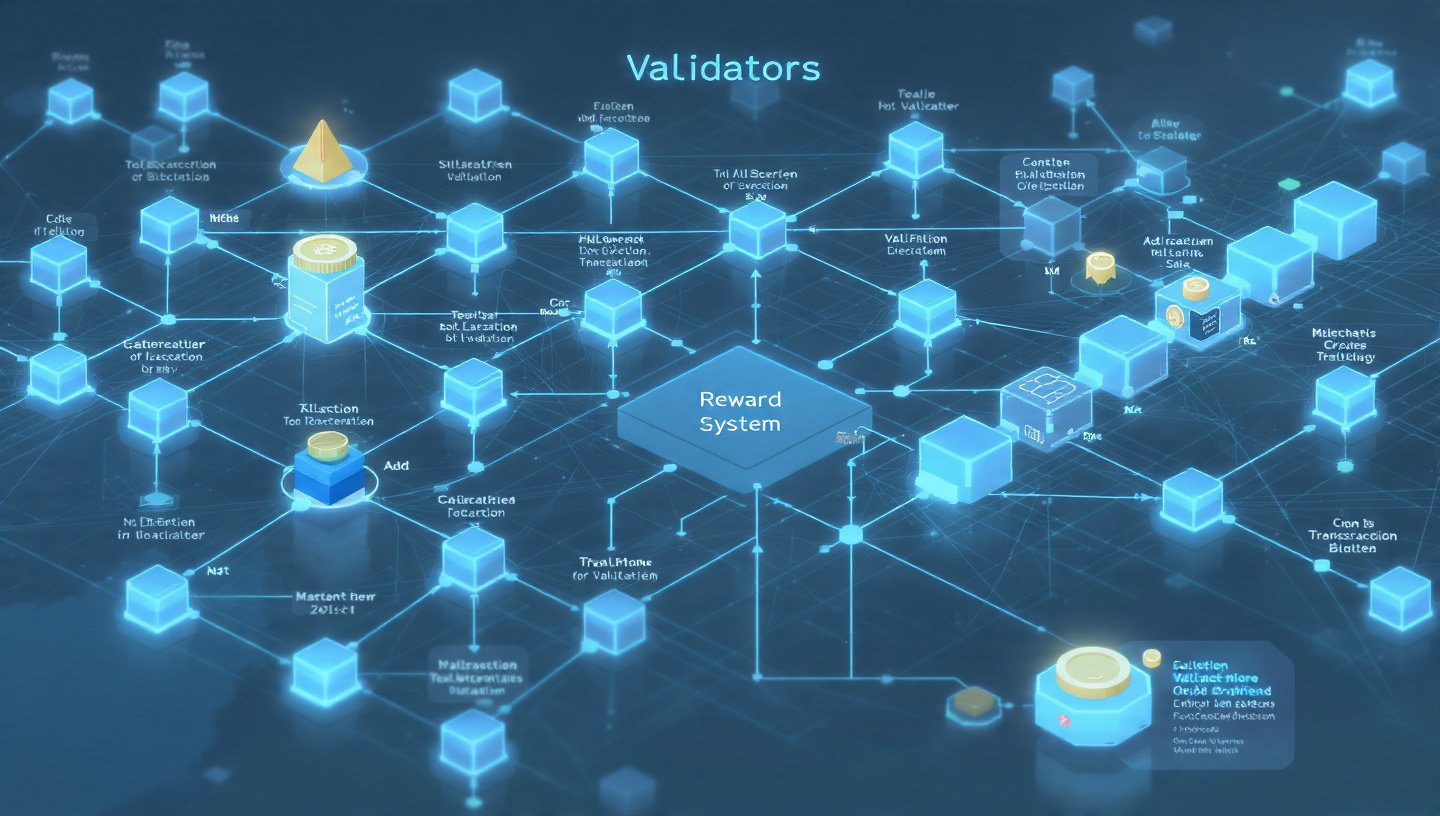
Validators earn rewards by being online and performing duties. In each slot, a validator may be chosen to propose a block, and in most slots, validators attest to the validity of proposed blocks. Rewards accumulate for timely attestations, correct proposal behavior, and participation in sync committees when selected. The system penalizes inactivity and dishonest behavior. This structure ties earnings to reliability and honesty rather than raw computational output.
Withdrawals and Compounding
Post-Merge and post-withdrawal upgrades, validators can set withdrawal credentials and periodically sweep accumulated rewards to a designated address. This enables compounding by restaking earned ETH or using it elsewhere in the ecosystem. Compounding increases long-term returns but requires careful planning around gas fees, timing, and risk exposure if you move into DeFi strategies.
Client Diversity and Best Practices
A core security principle in Ethereum staking is client diversity. Relying too heavily on a single client risks correlated failures. Best practice is to distribute validators across different execution and consensus clients, maintain redundant hardware or failover, and monitor performance with robust alerts. This diligence reduces the chance of downtime, preserves rewards, and supports the network’s resilience.
Common Myths About Ethereum Mining After The Merge
“I Found a Pool That Mines ETH—It Must Be Real”
If a service claims it is “mining ETH,” read the details carefully. It likely mines a different coin and pays in ETH, or it markets a synthetic product that mimics mining payouts. The underlying mechanism is not mining Ethereum, because Ethereum no longer uses proof of work. Always verify what chain your hardware is actually hashing and how payouts are generated.
“Mobile Apps Let You Mine Ethereum on Your Phone”
Phones cannot mine ETH on mainnet because Ethereum is proof of stake. Any mobile app advertising ETH mining is either simulating rewards, draining your battery for negligible returns on another coin, or using misleading language. Smartphone hardware is unsuited to profitable mining in general, and for Ethereum, mining is impossible by design.
“Staking Locks My ETH Forever”
Staking does not lock ETH forever. While validators must follow exit queues and protocol rules, withdrawals exist and are processed regularly. Liquidity needs can also be managed via liquid staking tokens that allow you to exit by selling the token rather than waiting through queues, though that introduces market price dynamics.
A Practical Roadmap Based on Your Situation
I Already Own GPUs—What Should I Do?
If you already invested in GPUs, treat mining alternatives as a portfolio project. Evaluate ETC and other GPU-friendly chains by calculating expected daily rewards, power costs per kilowatt-hour, and maintenance overhead. Compare the net result with an equivalent dollar-cost-averaged ETH purchase or with staking yield on any ETH you hold. Remember to price in wear-and-tear and potential resale value of hardware.
I Hold ETH and Want Yield Without Running Servers
If you want set-and-forget ETH yield, explore non-custodial pooled staking or liquid staking from reputable protocols. Read audits, understand fee models, and review validator performance statistics. Diversify providers if your allocation is significant. Keep seed phrases offline, use hardware wallets, and practice two-factor authentication on any connected services.
I Want Maximum Decentralization and Control
If you value sovereignty and network health, solo staking is the ideal path. Budget for hardware, choose diverse clients, set up monitoring, and plan for secure backups of validator keys and withdrawal credentials. Review slashing protection and rehearse disaster recovery. The learning curve is real, but the autonomy and alignment are deeply rewarding.
Security and Compliance Considerations
Self-Custody Is a Superpower—Use It Wisely
For serious capital, self-custody with hardware wallets remains the safest baseline. Store seed phrases in secure, offline locations, ideally with geographic redundancy. Never type seed phrases into a website or transmit them digitally. Use signing devices to approve transactions and verify addresses on-screen before confirming.
Smart-Contract and Counterparty Risk
If you opt for liquid staking or pooled solutions, accept that you are trusting smart contracts or operators. Review audit histories, bug-bounty programs, and track records across market cycles. Diversify exposure across multiple providers to avoid single points of failure. For any centralized exchange, treat counterparty risk as real and size positions accordingly.
Taxes and Recordkeeping
Staking rewards, mining proceeds from alternative chains, and conversions into ETH can all have tax consequences in many jurisdictions. Keep meticulous records of deposits, withdrawals, rewards, and swaps. Using transparent tools and exportable logs will save you time and stress later.
Strategic Takeaways for 2025 and Beyond
Alignment with Ethereum’s Roadmap
The network’s north star is scalability and user experience via layer-2 rollups, data availability enhancements, and continued client diversity. Mining does not fit into this roadmap; staking does. If your goal is to grow with Ethereum, align your strategy with staking, not with attempts to resurrect obsolete mining workflows.
Portfolio Role of ETH
ETH remains a core smart-contract platform asset with a fee-based economy and a global developer community. Participating through staking enhances expected return and aligns incentives with the protocol’s success. If you want exposure to mining economics, treat it as a separate bet on proof-of-work assets rather than a backdoor to mining ETH.
Education as an Edge
The most consistent advantage in crypto is continuous learning. Ignore outdated tutorials that still rank on search engines. Rely on up-to-date documentation, credible researchers, and official client teams. With facts on your side, you will deploy capital more efficiently and avoid traps that ensnare those who do not realize that Ethereum has moved on.
Conclusion
So, can you mine Ethereum today? No—Ethereum’s transition to proof of stake ended mining on the main network, replacing GPUs with validators and transforming how the protocol secures itself. That does not mean your path to ETH-denominated returns is closed. You can stake ETH directly, join non-custodial pools, use liquid staking tokens to maintain flexibility, or, if you already own GPUs, explore proof-of-work alternatives like Ethereum Classic and periodically convert proceeds into ETH. Success in 2025 comes from aligning with Ethereum’s present reality, not the nostalgia of its mining past. Focus on secure custody, careful provider choice, and a strategy that emphasizes compounding yield rather than chasing promises that no longer apply. With the right knowledge and risk controls, you can participate confidently and make Ethereum a resilient part of your long-term plan.
Final Thought
Q: Can you mine Ethereum on the main network anymore?
No. Ethereum switched from proof of work to proof of stake, so there is no GPU or ASIC mining on mainnet. Rewards go to validators who stake ETH and perform network duties rather than to miners solving puzzles.
Q: Is Ethereum Classic the same as Ethereum for mining?
No. Ethereum Classic (ETC) is a separate network that still uses proof of work and can be mined with GPUs, but it is not Ethereum. If your goal is ETH exposure, you would need to mine ETC and then swap to ETH, accepting fees, spreads, and market risk.
Q: What is the minimum to stake if I don’t have 32 ETH?
You can use pooled staking or liquid staking with much smaller amounts. These solutions aggregate many depositors and run validators on your behalf while distributing rewards proportionally, though they introduce smart-contract or operator risks.
Q: Are staking rewards fixed like interest in a bank?
No. Staking yield fluctuates based on total ETH staked, network fees, MEV dynamics, and validator performance. Rewards are variable and can rise or fall with network conditions, though they are generally more predictable than mining payouts on small proof-of-work chains.
Q: Can I still make money with my old Ethereum mining rig?
Possibly, but not on Ethereum. You would need to mine other GPU-friendly coins such as Ethereum Classic or Ravencoin and evaluate profitability after electricity and hardware depreciation. For many, purchasing and staking ETH is simpler and more efficient than retooling rigs for marginal mining returns.
