

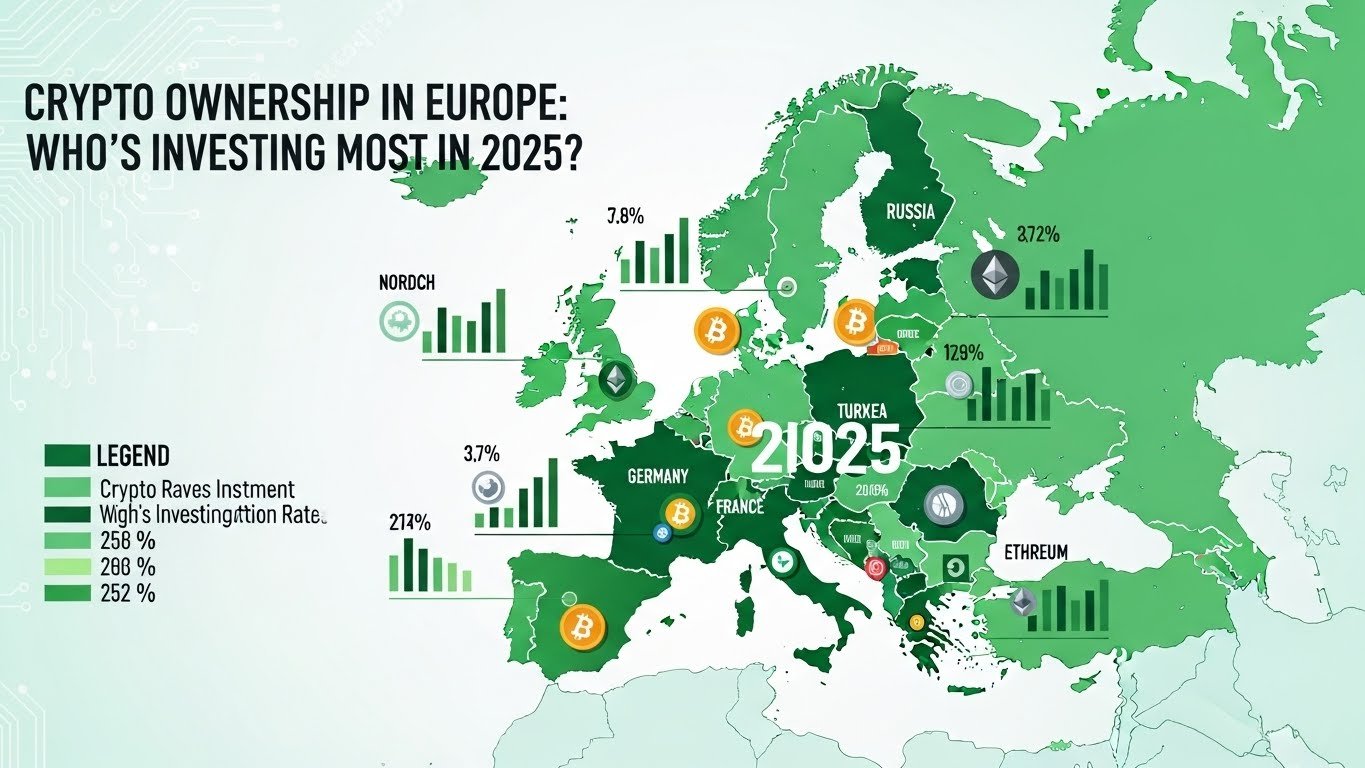
The landscape of digital finance is experiencing a remarkable transformation across the European continent, with crypto ownership in Europe reaching unprecedented levels. As traditional financial systems evolve and younger generations seek alternative investment vehicles, cryptocurrency has emerged as a compelling asset class that’s capturing the attention of millions. Recent data indicate that European investors are increasingly diversifying their portfolios with digital currencies, marking a significant shift in how people perceive and interact with money. This surge in cryptocurrency adoption reflects broader technological advancement and growing confidence in blockchain-based financial systems that promise transparency, security, and decentralization.
Understanding the patterns of crypto ownership in Europe provides valuable insights into the future of finance, investment behavior, and technological adoption across different demographics and nations. The rise of digital assets isn’t merely a passing trend but rather represents a fundamental reimagining of wealth management and financial independence for European citizens who are embracing this digital revolution with remarkable enthusiasm.
The Current State of Cryptocurrency Adoption in Europe
The European cryptocurrency market has witnessed exponential growth over the past several years, with adoption rates climbing steadily across virtually every nation on the continent. Cryptocurrency adoption in Europe has accelerated, particularly since 2020, driven by multiple factors including increased institutional acceptance, improved regulatory clarity in several jurisdictions, and heightened awareness of blockchain technology’s potential applications beyond simple currency transactions.
Data from comprehensive market research reveals that approximately eighteen to twenty-two percent of Europeans now hold some form of digital assets, representing a substantial increase from previous years when adoption hovered in single digits. This remarkable growth trajectory positions Europe as one of the most crypto-friendly regions globally, competing directly with North America and certain Asian markets for leadership in digital currency ownership.
The demographic profile of European crypto investors reveals fascinating patterns that challenge conventional assumptions about technology adoption. While younger generations between eighteen and thirty-four years old represent the largest cohort of cryptocurrency holders, there’s substantial and growing interest among middle-aged investors who view digital assets investment as a legitimate component of retirement planning and wealth preservation strategies.
Leading Nations in European Crypto Investment
When examining which countries demonstrate the highest rates of crypto ownership in Europe, several nations consistently emerge as frontrunners, each with unique cultural and economic factors driving their exceptional adoption rates.
Turkey stands at the forefront of European cryptocurrency ownership, though technically straddling both European and Asian continents. Turkish citizens have embraced digital currencies with remarkable enthusiasm, with ownership rates exceeding thirty percent of the adult population. Economic instability and currency devaluation have pushed many Turkish residents toward cryptocurrencies as a hedge against inflation and a store of value that transcends traditional banking limitations.
Romania has emerged as an unexpected leader in cryptocurrency adoption Europe, boasting ownership rates around twelve to fifteen percent. The nation’s strong technology sector, relatively young population, and growing entrepreneurial ecosystem have created fertile ground for cryptocurrency enthusiasm. Romanian investors particularly favor Bitcoin and Ethereum, viewing these established cryptocurrencies as both investment vehicles and technological innovations worth supporting.
Switzerland maintains its position as a cryptocurrency powerhouse, earning its nickname as “Crypto Valley” through the concentration of blockchain companies and cryptocurrency businesses in the Zug region. Swiss citizens demonstrate a sophisticated understanding of digital currency ownership, with approximately eleven percent holding various cryptocurrencies. The country’s favorable regulatory environment and traditional strength in banking have seamlessly translated into leadership within the digital finance sector.
The United Kingdom represents another significant market for European crypto investors, with approximately ten percent of adults holding cryptocurrency. British investors tend to favor established coins like Bitcoin while also showing a willingness to explore emerging altcoins and decentralized finance protocols. The UK’s robust fintech ecosystem and London’s status as a global financial center have naturally positioned the nation as a leader in cryptocurrency innovation and adoption.
Demographics Driving the Cryptocurrency Market in Europe: Growth
Understanding who invests in cryptocurrency reveals important insights about the future trajectory of crypto ownership in Europe. Gender disparities remain notable, with male investors outnumbering female investors approximately two to one across most European nations. However, this gap is gradually narrowing as cryptocurrency education improves and the technology becomes more accessible through user-friendly platforms and applications.
Educational attainment correlates strongly with cryptocurrency ownership, as individuals with university degrees demonstrate significantly higher adoption rates than those without tertiary education. This pattern reflects both the technical complexity associated with understanding blockchain technology and the financial resources typically available to more educated demographics. However, simplified trading platforms and increased mainstream coverage are helping democratize access to digital assets investment across educational boundaries.
Income levels predictably influence cryptocurrency adoption, with higher earners more likely to allocate portions of their investment portfolios to digital currencies. Middle-income Europeans increasingly view cryptocurrency as an accessible entry point into investment markets that previously seemed exclusive to wealthy individuals with significant capital. The ability to purchase fractional amounts of expensive cryptocurrencies like Bitcoin has removed traditional barriers to entry that characterized stock markets and real estate investment.
Geographic distribution of cryptocurrency adoption in Europe reveals interesting urban-rural divides, with metropolitan areas demonstrating substantially higher ownership rates than rural communities. Cities offer greater access to cryptocurrency education, networking opportunities with other investors, and the technological infrastructure necessary for secure digital asset management. However, remote work trends and improved internet connectivity are gradually extending cryptocurrency access to previously underserved rural populations.
Regulatory Environment Shaping European Crypto Investors
The regulatory landscape significantly influences crypto ownership in Europe, with different nations adopting varied approaches ranging from enthusiastic support to cautious regulation. The European Union’s Markets in Crypto-Assets Regulation (MiCA) represents a landmark effort to create comprehensive, harmonized rules governing cryptocurrency markets across member states. This regulatory framework aims to protect consumers while fostering innovation and maintaining Europe’s competitive position in the global cryptocurrency ecosystem.
Portugal has distinguished itself as exceptionally crypto-friendly, offering tax exemptions for cryptocurrency gains under certain conditions. This favorable treatment has attracted both individual investors and cryptocurrency businesses, contributing to higher adoption rates among Portuguese residents. The country’s warm climate and relatively affordable cost of living have also made it a popular destination for digital nomads and cryptocurrency entrepreneurs seeking favorable regulatory environments.
Germany takes a more measured approach to cryptocurrency regulation, treating digital assets as private money for tax purposes while requiring declaration of holdings. German investors demonstrate particular interest in blockchain technology adoption beyond simple currency speculation, focusing on practical applications in supply chain management, healthcare, and government services. This pragmatic approach reflects broader German values emphasizing substance over speculation.
France has worked to position itself as a cryptocurrency hub through progressive regulation that provides legal clarity while maintaining consumer protections. French citizens show growing interest in crypto trading Europe opportunities, with Paris emerging as a significant center for blockchain startups and cryptocurrency innovation. The French regulatory authority has licensed numerous cryptocurrency service providers, legitimizing the industry and encouraging broader participation.
Investment Motivations Behind Digital Assets Investment
Understanding why Europeans embrace cryptocurrency illuminates the psychological and economic factors driving crypto ownership in Europe. Inflation concerns represent a primary motivation, particularly in nations experiencing currency instability or aggressive monetary policy. Cryptocurrencies with fixed supply limits, particularly Bitcoin, appeal to investors seeking protection against purchasing power erosion that characterizes traditional fiat currencies during periods of high inflation.
Portfolio diversification attracts sophisticated investors who recognize that cryptocurrency price movements often demonstrate low correlation with traditional assets like stocks and bonds. This uncorrelated behavior makes digital assets investment attractive for risk management purposes, allowing investors to potentially reduce overall portfolio volatility while maintaining exposure to high-growth opportunities. Financial advisors increasingly recommend small cryptocurrency allocations as part of balanced investment strategies.
Technological enthusiasm motivates another significant segment of European crypto investors who view blockchain technology as genuinely transformative rather than merely speculative. These investors support cryptocurrency projects based on technical innovation, practical utility, and potential to disrupt established industries. They often participate in cryptocurrency communities, contribute to open-source development, and evangelize blockchain applications beyond simple financial transactions.
Philosophical alignment with decentralization principles drives ideologically-motivated cryptocurrency adoption among Europeans skeptical of centralized banking systems and government monetary control. These investors view cryptocurrency as empowering individuals through financial sovereignty, censorship resistance, and freedom from institutional intermediaries. This motivation particularly resonates in nations with histories of authoritarian governance or financial instability.
Popular Cryptocurrencies Among Bitcoin Ownership Europe Enthusiasts
Bitcoin ownership Europe remains dominant, with the pioneering cryptocurrency commanding the largest share of European digital asset portfolios. Bitcoin’s first-mover advantage, robust security through proof-of-work mining, and widespread recognition as “digital gold” make it the default entry point for new cryptocurrency investors. European exchanges report that Bitcoin consistently represents forty to fifty percent of trading volume, demonstrating sustained confidence in the original cryptocurrency.
Ethereum maintains strong appeal among European crypto investors interested in smart contract functionality and decentralized application development. The transition to proof-of-stake consensus through the Ethereum 2.0 upgrade addressed environmental concerns while improving network scalability. European developers actively contribute to Ethereum’s ecosystem, building innovative applications in decentralized finance, non-fungible tokens, and blockchain gaming that drive continued interest and investment.
Stablecoins have gained significant traction as bridges between traditional finance and cryptocurrency markets, offering price stability pegged to fiat currencies while maintaining blockchain benefits. European investors use stablecoins for trading, remittances, and as temporary stores of value during market volatility. Regulatory attention focused on stablecoins has intensified, with authorities seeking to ensure adequate backing and consumer protection without stifling innovation.
Alternative cryptocurrencies addressing specific use cases attract Europeans seeking exposure to emerging blockchain applications. Projects focused on privacy, interoperability, decentralized finance, and real-world asset tokenization demonstrate that the cryptocurrency market Europe interest extends far beyond simple speculation. Investors increasingly conduct thorough research into project fundamentals, team credentials, and technological innovation before committing capital to newer cryptocurrencies.
Challenges Facing Cryptocurrency Adoption in Europe
Despite impressive growth, crypto ownership in Europe faces significant obstacles that could impact future adoption trajectories. Regulatory uncertainty remains a persistent concern, as evolving rules create compliance challenges for both investors and businesses operating in the cryptocurrency space. While frameworks like MiCA provide clarity, implementation details, and national variations introduce complexity that potentially discourages mainstream adoption among risk-averse individuals.
Security concerns continue to plague cryptocurrency markets, with exchange hacks, phishing attacks, and smart contract vulnerabilities resulting in substantial losses for investors. European authorities emphasize consumer education around security best practices, including hardware wallet usage, two-factor authentication, and recognition of common scams. However, the technical complexity associated with proper cryptocurrency security management remains a barrier preventing broader participation.
Volatility characterizing the cryptocurrency market in Europe prices deters conservative investors uncomfortable with dramatic value fluctuations. While volatility creates profit opportunities for traders, it undermines cryptocurrency’s utility as a stable store of value or reliable transaction medium. Stablecoin adoption partially addresses this concern, but widespread perception of cryptocurrency as excessively risky persists among mainstream European populations.
Environmental concerns related to cryptocurrency mining have generated controversy, particularly regarding Bitcoin’s energy consumption through proof-of-work consensus. European environmental consciousness means that sustainability questions significantly influence public opinion about cryptocurrency legitimacy. The industry responds through renewable energy mining initiatives and alternative consensus mechanisms, but perception challenges persist among environmentally-focused demographics.
Future Predictions for Digital Currency Ownership Trends
The trajectory of crypto ownership in Europe appears overwhelmingly positive, with multiple indicators suggesting continued growth throughout the coming decade. Institutional adoption by banks, asset managers, and corporations provides legitimacy that encourages retail investor participation. As traditional financial institutions integrate cryptocurrency services into standard offerings, barriers separating conventional finance from digital assets will continue dissolving.
Technological improvements addressing current cryptocurrency limitations promise to accelerate adoption among Europeans currently deterred by complexity or performance issues. Layer-two scaling solutions, improved user interfaces, and seamless fiat-to-crypto on-ramps make digital currency ownership increasingly accessible to non-technical users. As cryptocurrency interactions become as intuitive as traditional banking applications, mainstream adoption will accelerate dramatically.
Generational wealth transfer represents a significant catalyst for future cryptocurrency adoption Europe, as younger generations inheriting assets from older relatives demonstrate strong preferences for digital investments. Millennials and Generation Z exhibit comfort with technology and skepticism toward traditional institutions, which naturally translates into cryptocurrency enthusiasm. As these demographics gain economic power, their investment preferences will reshape financial markets toward greater cryptocurrency integration.
Central bank digital currencies under development by European monetary authorities may paradoxically accelerate private cryptocurrency adoption by familiarizing populations with digital currency concepts. While government-issued digital currencies differ fundamentally from decentralized cryptocurrencies, their introduction will normalize digital money and potentially drive curiosity about non-governmental alternatives offering greater privacy and autonomy.
Educational Initiatives Supporting European Crypto Investors
Education plays a crucial role in expanding crypto ownership in Europe beyond early adopters to mainstream populations. Universities across the continent now offer blockchain and cryptocurrency courses, producing graduates with technical expertise and theoretical understanding necessary for informed participation. These educational programs legitimize cryptocurrency as a serious field of study rather than fringe speculation, influencing public perception positively.
Online learning platforms provide accessible cryptocurrency education to Europeans regardless of location or formal educational background. Courses covering blockchain fundamentals, investment strategies, security practices, and regulatory compliance help newcomers navigate the complex cryptocurrency landscape confidently. Community-driven educational initiatives through meetups, conferences, and online forums foster peer learning and networking opportunities.
Financial literacy programs increasingly incorporate cryptocurrency components, recognizing that digital assets investment represents an important aspect of modern financial planning. Teaching young Europeans about cryptocurrency alongside traditional topics like budgeting, saving, and investing prepares them for financial landscapes where digital and traditional assets coexist. This integration into standard financial education signals cryptocurrency’s transition from niche interest to mainstream consideration.
Media coverage has evolved from skeptical dismissal toward balanced reporting that acknowledges both cryptocurrency opportunities and risks. Quality journalism explaining blockchain technology, profiling successful projects, and investigating fraudulent schemes helps Europeans make informed decisions about cryptocurrency market Europe participation. Improved media literacy among cryptocurrency enthusiasts also helps combat misinformation and promotes evidence-based understanding.
Economic Impact of Rising Crypto Trading Europe Activity
Growing crypto trading Europe volume generates significant economic effects extending beyond individual investment returns. Cryptocurrency exchanges employ thousands of Europeans in technical, compliance, customer service, and management roles. These high-quality jobs contribute to local economies while developing specialized expertise that positions Europe competitively in the global digital economy.
Tax revenues from cryptocurrency transactions provide governments with new funding sources, though collection challenges persist due to the technology’s pseudonymous nature. European nations implement various reporting requirements and taxation schemes attempting to capture appropriate revenue from cryptocurrency gains. As compliance improves and voluntary reporting increases, cryptocurrency taxation will represent meaningful government revenue streams.
Blockchain startups attracting venture capital investment concentrate in European technology hubs, creating innovation clusters similar to traditional tech ecosystems. Cities like Berlin, Amsterdam, Paris, and Stockholm compete for blockchain talent and companies through favorable policies, infrastructure investment, and supportive regulatory environments. This competition benefits the broader European economy through job creation and technological advancement.
Traditional financial institutions adapting to cryptocurrency demand invest heavily in technology infrastructure, staff training, and product development. Banks offering cryptocurrency custody, trading, and investment products create new revenue streams while satisfying customer demands for integrated financial services. This institutional involvement legitimizes cryptocurrency while generating employment and economic activity throughout the financial services sector.
Conclusion: The Future of Crypto Ownership in Europe
The remarkable rise of crypto ownership in Europe represents more than temporary speculation or technological curiosity. It signals a fundamental shift in how Europeans conceptualize money, investment, and financial sovereignty. From Turkey’s inflation-driven adoption to Switzerland’s blockchain innovation hub, each nation contributes unique perspectives to the continent’s cryptocurrency narrative. The demographic diversity of European crypto investors, spanning age groups, education levels, and income brackets, demonstrates cryptocurrency’s broad appeal and transformative potential.
As regulatory frameworks mature, technology improves, and institutional adoption accelerates, crypto ownership in Europe will likely continue its upward trajectory, potentially reaching majority adoption within the next decade. The challenges of volatility, security, and environmental concerns require ongoing attention, but the cryptocurrency community demonstrates remarkable resilience and innovation in addressing obstacles. Educational initiatives, improved infrastructure, and generational attitudes position Europe as a global leader in responsible cryptocurrency adoption that balances innovation with consumer protection.
For Europeans considering entering the cryptocurrency market Europe, the current landscape offers unprecedented opportunities alongside notable risks. Thorough research, cautious investment approaches, and continuous education provide foundations for successful participation in this evolving financial ecosystem. Whether motivated by inflation protection, portfolio diversification, technological enthusiasm, or philosophical alignment with decentralization, European investors find compelling reasons to explore digital assets investment as components of modern financial strategies.
The question isn’t whether crypto ownership in Europe will continue growing, but rather how quickly adoption will accelerate and what forms cryptocurrency integration will ultimately take. As blockchain technology matures and cryptocurrency use cases expand beyond speculation into practical applications, Europe stands poised to lead the global transition toward digital financial systems that empower individuals while maintaining necessary regulatory oversight. The continent’s cryptocurrency journey has only begun, with the most transformative developments likely still ahead.
See more:Bitcoin Price 2026: Bitwise Predicts All-Time High & Lower Volatility
